
Top 6 Benefits of AI in Project Management in 2026


AI in project management is a set of tools that help small teams save time, reduce manual work, and make better decisions across the project lifecycle.
According to MarketsandMarkets (2023), adoption of these tools continues to grow: the global AI project management market is expected to reach $5.7 billion by 2028, growing at a CAGR of 17.3%.
Small businesses usually have fewer people, tighter margins, and less room for project mistakes. That makes AI valuable because even the smallest time savings can have a visible impact on output and profitability.
Read on to learn more about the top benefits of AI in project management and how you can run projects more efficiently.
Key takeaways
- AI removes a large portion of manual project management work
AI automates repetitive tasks, such as updates, scheduling, reminders, reporting, and meeting summaries. This frees up small teams to focus more on execution and less on administrative coordination, which directly improves productivity. - Better forecasting helps small businesses avoid costly mistakes
By analyzing historical data, AI can predict delays, bottlenecks, and realistic timelines with higher accuracy than manual planning. - Smarter resource allocation improves team performance and prevents burnout
AI matches tasks to the right people based on workload, skills, and availability. It results in more balanced workloads, fewer bottlenecks, and healthier overall team capacity management. - AI enables faster, more confident decision-making through real-time insights
Instead of reacting to problems after they happen, AI identifies delays, overloaded team members, or budget issues early. - Knowlix bundles project management with 50+ other connected apps at $24.90/user/month
Knowlix replaces 50+ apps, such as project management, workflows, communication, and more, in a single platform with an AI Teammate on autopilot.
6 benefits of AI in project management every small business should know about
AI can make project management simpler and more effective, and it can help you stay organized and focused on delivering results.
Here are the key benefits.
| Benefit | How AI helps | Key impact |
|---|---|---|
| Time savings | Automates admin tasks like updates, reminders, reports, and scheduling | Frees up time for core work and execution |
| Improved accuracy & forecasting | Uses data to predict timelines, delays, and bottlenecks | Fewer mistakes and better planning |
| Resource allocation | Matches tasks to skills and balances workloads | Prevents overload and improves efficiency |
| Decision-making & risk detection | Provides real-time insights and flags project risks early | Faster, more informed decisions |
| Cost efficiency | Reduces the need for extra staff by automating coordination work | Lower costs and scalable output |
| Competitive advantage | Offers advanced tools like analytics and automation to small teams | Helps small businesses compete with larger companies |
1. Time savings
Project scheduling and time management are the areas with the highest potential for AI process automation.
AI can automate repetitive project management tasks that used to take up significant time. Instead of manually writing status updates, sending reminders, organizing meetings, and summarizing discussions, AI tools can handle these tasks instantly.
For example, after a team meeting, AI can automatically generate a clean summary, assign follow-up tasks, and update project boards.
It can also generate daily or weekly progress reports in seconds.
For small businesses juggling multiple roles, this time savings is important because teams can finally focus on doing the actual work. When it comes to task and scheduling automation, 63% of project managers report increased productivity as a top benefit of AI.
2. Improved project accuracy and forecasting
AI improves project accuracy and forecasting by analyzing historical project data and identifying patterns that humans often miss.
AI-driven forecasting can:
- Estimate realistic timelines based on past performance
- Predict resource bottlenecks
- Identify tasks likely to be delayed
- Suggest adjustments to keep projects on track
Instead of guessing how long a project will take, AI provides probability-based estimates grounded in real data and adjusts expectations as new information comes in.
Although this doesn’t eliminate uncertainty, it reduces it significantly.
Small businesses operate on tight margins, which makes mistakes more costly. A delayed project can affect cash flow, customer satisfaction, and team morale.
3. More effective resource allocation
Better resource allocation helps prevent burnout, improves team balance, and keeps projects moving at the right pace.
AI can help small businesses assign the right people to the right tasks.
By analyzing workload, skills, and availability, AI tools can recommend more effective ways to distribute work.
They can:
- Analyze team workload distribution
- Match tasks to skills and availability
- Prevent over-assignment of work
- Suggest reallocation when bottlenecks appear
By ensuring workloads remain realistic and aligned with capacity, AI helps you support both productivity and team well-being.
32% of project managers cite resource allocation as a key AI benefit, second only to task automation at 33%, according to Capterra.
4. Better decision-making and risk detection
AI tools can turn project data into real-time insights, which means that you can be proactive and anticipate potential issues.
Without AI, decision-making remains reactive, and problems are usually addressed only after they happen.
However, AI tools continuously analyze project activity and highlight what is most important:
- Tasks that are falling behind schedule
- Team members who are overloaded
- Dependencies that may cause delays
- Budget areas that are trending off track
In addition to showing data, AI interprets it.
For example, instead of saying “Task X is delayed,” it might say that “Task X delay could impact product launch by four days unless reassigned.”
This kind of insight can help small businesses make faster, more informed decisions.
5. Improved cost efficiency
AI offers a cost-effective alternative to hiring additional project managers by automating many tasks that would otherwise require additional staff.
With AI handling scheduling, reporting, and task tracking, small businesses can:
- Manage more projects without increasing headcount
- Reduce reliance on manual coordination
- Optimize existing team capacity
- Scale operations more efficiently
It means that a small team of five can now handle workloads that previously required many more people.
Take a 5-person team at $50/hour loaded cost as an example. If AI saves 5 hours per person per week, that is $250 per person per week, resulting in $5,000 per month team-wide.
Knowlix paid plans start at $24.90 per user per month: break-even is under 30 minutes saved per person per week.
6. Competitive advantage
Bigger companies had an advantage because they could afford more sophisticated project management systems, dedicated teams, and advanced analytics.
AI changes this dynamic completely by enabling small businesses to access many of the same capabilities through affordable, cloud-based tools:
- Predictive analytics for project timelines
- Automated reporting and dashboards
- Intelligent task prioritization
- Real-time risk detection
As a result, small businesses can move faster, adapt more quickly, and execute more efficiently than some larger competitors who are slowed by bureaucracy, multiple approvals, and complex processes.
When AI in PM isn't worth it?
While AI in project management offers clear benefits for many small businesses, it isn’t always the right fit in every situation.
In some cases, adopting AI too early or without the right conditions can create more issues than value.
Here are the main potential challenges:
- Low project complexity or very small workloads: If you only manage a few simple, repeatable projects with minimal coordination, the time spent setting up and maintaining AI tools may outweigh the efficiency gains.
- Poor data quality or inconsistent workflows: AI systems rely on structured, updated information to deliver accurate insights. If tasks aren’t consistently updated, deadlines are unclear, or team members don’t follow a standard process, the AI’s recommendations may become unreliable or even misleading.
- Low team adoption or resistance to change: If team members aren’t comfortable using new tools or continue working outside the system, the AI can’t function properly because it depends on complete visibility of project activity.
- The lack of clear process ownership or project discipline: Without a basic project management structure in place, automation can’t fix underlying organizational issues.
AI in project management delivers the most value when there is already a basis of clear workflows, active usage, and growing operational complexity.
If you are at an early stage or run loosely structured teams, focusing on process discipline first may be a better starting point before introducing AI tools.
How can Knowlix help you reap the benefits of AI in project management?
Knowlix is an all-in-one AI Business Platform that replaces 50+ apps in a single workspace, replacing the need for multiple disconnected systems across project management, sales, marketing, operations, and other business functions.
It allows you to easily activate or deactivate individual apps with one click, so you can customize the platform to fit your specific workflow and business needs.
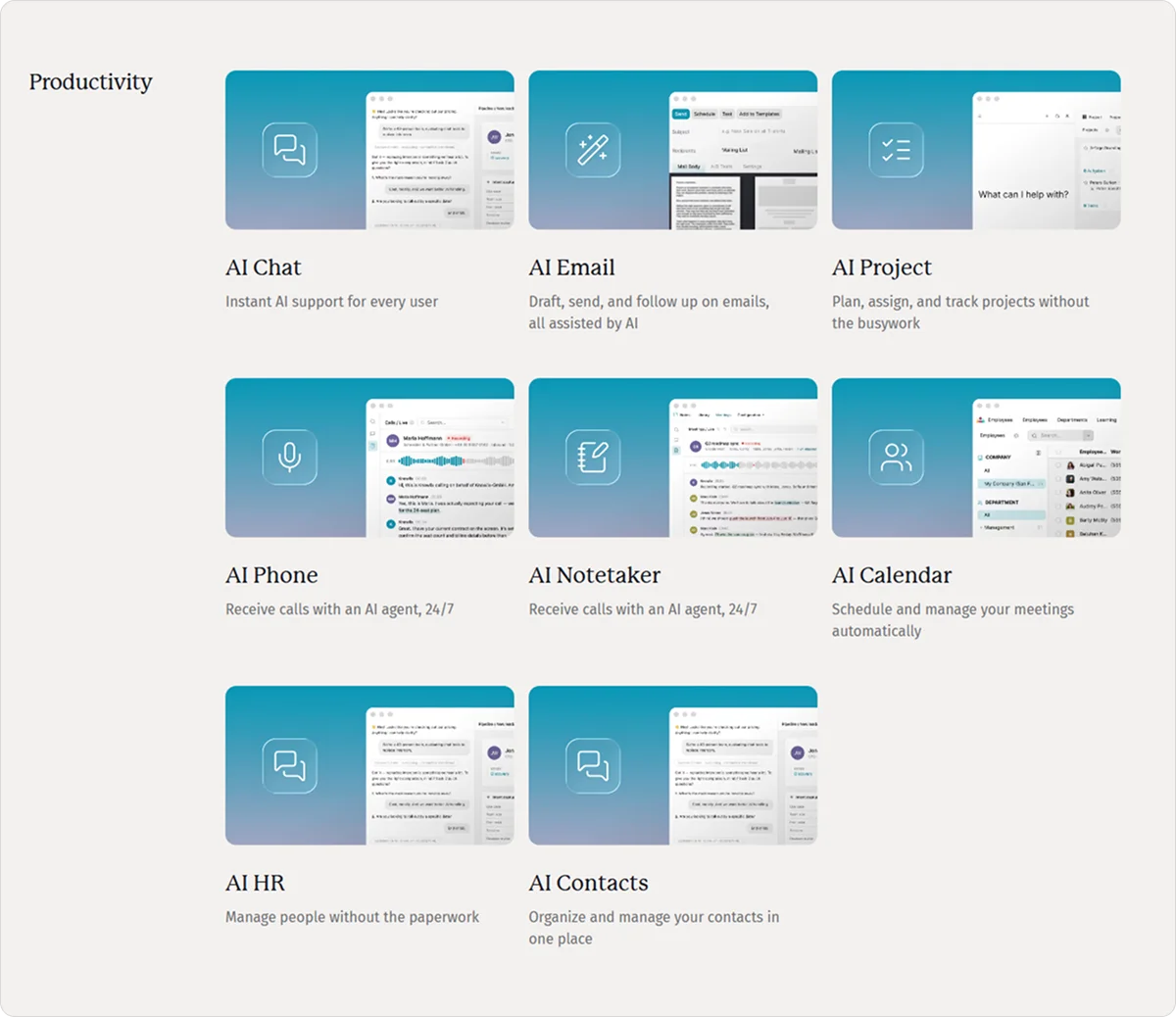
Central to our platform is our AI Teammate, fully integrated with your business and project data and aware of contextual details, so it keeps all workflows up to date in real time.
It automatically syncs conversations, updates, and decisions across your system and can add new requests to project trackers, assign follow-ups, update deal or project stages after meetings, and keep timelines progressing without manual input.
While it handles routine task management autonomously, you remain in full control: Important or sensitive actions require your approval before execution, combining automation with oversight.
Our agentic AI project management tool enables you to run projects more efficiently through:
- Plain language project setup: You can describe a project in text or conversation, and Knowlix automatically turns it into structured tasks, assigns ownership, and builds out timelines.
- Ongoing task & deadline management: Knowlix continuously updates tasks and deadlines in real time, keeping project progress organized without manual tracking or follow-ups.
- Client project delivery: The AI agent keeps client work structured with clear responsibilities, deadlines, and updates, reducing the need for constant check-ins or risk of missed details.
- Internal team coordination: AI instantly captures and converts meeting decisions into actionable tasks.
Knowlix is designed for small teams and has no steep learning curve, so you don’t need complex workflows, certifications, or training.
Teams can get started quickly and integrate AI into their daily workflows without changing how they already operate.
Sign up for Knowlix today to see how you can keep projects on track.


Frequently asked questions


Yes, especially for small businesses with limited time, budget, and staff.
AI helps reduce operational overhead and improve planning accuracy without hiring extra staff.
AI can automate many repetitive coordination tasks such as scheduling, sending reminders, generating status updates, summarizing meetings, and producing progress reports.
These “admin-heavy” tasks are among the most common AI use cases in project management tools because they save a lot of time for small teams. As a result, teams can focus more on execution and client work instead of manual tracking.
No, AI isn’t replacing project managers; it’s supporting them.
While AI handles routine tasks and provides real-time project signals, human judgment is still necessary for leadership, communication, and decision-making in complex situations.
For example, project management areas with relatively low AI impact include stakeholder management, project communication, and project budgeting because they rely heavily on human judgment, trust, and context.
Subscribe for Our Newsletter
Book your call below.


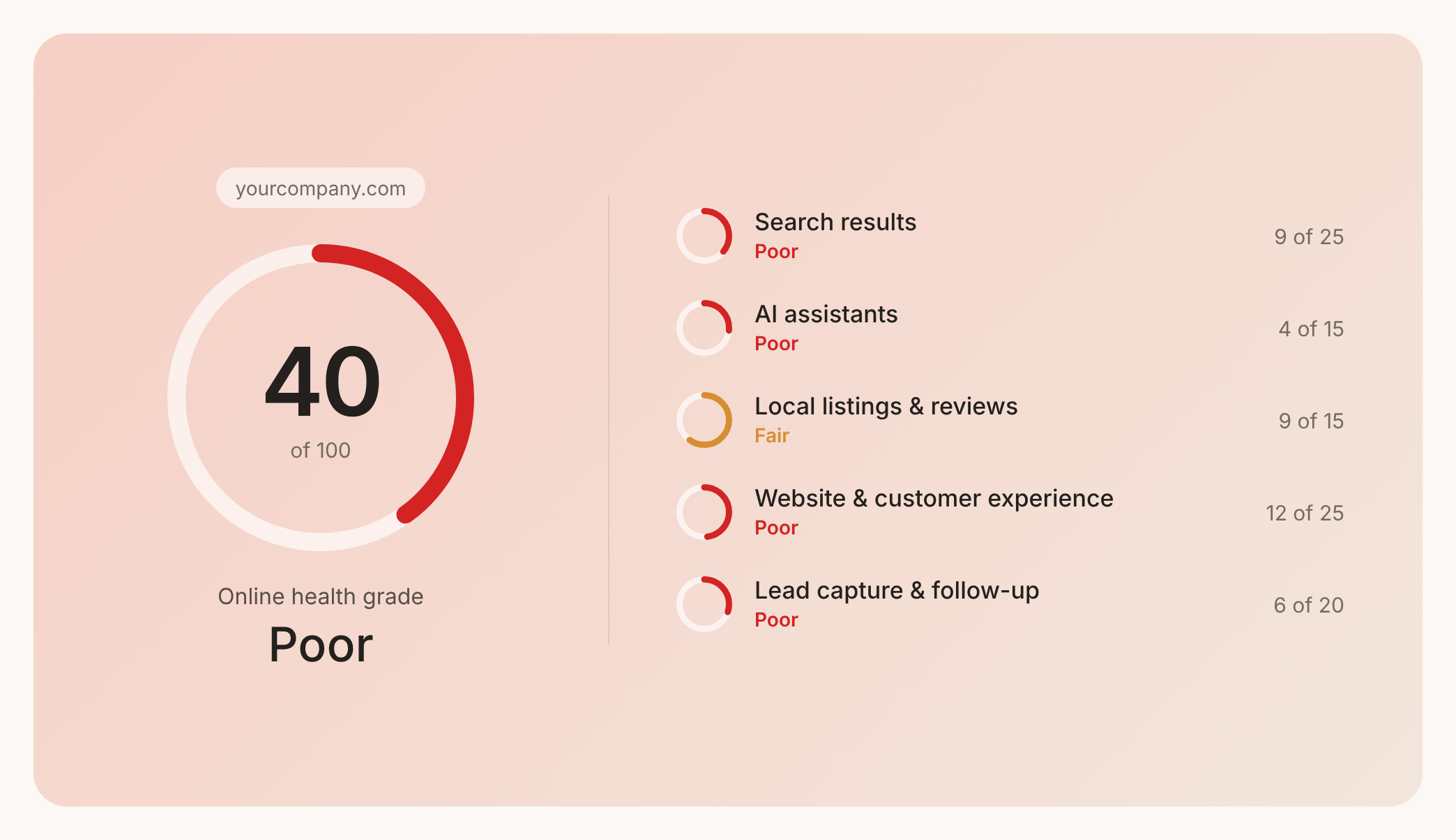

Check your website health score
Scan your site in seconds and make sure you're beating your competitors.
