
7 Types of AI Agents to Automate Your Workflows in 2026


AI agents are autonomous software systems that can understand goals, make decisions, and complete tasks with minimal human input.
They can reason, adapt, and interact with multiple systems in real time. Some specialize in simple repetitive tasks, while others coordinate workflows involving research, communication, and execution.
Read on to learn more about different types of AI agents for workflow automation and see where they deliver the most business value.
Key takeaways
- AI agents automate entire workflows, not just single tasks
AI agents are intelligent systems that can reason, make decisions, and execute multi-step processes using tools, APIs, and memory. They can adapt to changing conditions and handle complex workflows end-to-end with minimal human input. - They are a major upgrade over traditional automation and chatbots
Traditional automation follows fixed rules and breaks when conditions change, while chatbots only handle conversations. AI agents combine reasoning and action, allowing them to interact with users and complete real operational work. - Different types of AI agents solve different business problems
Each agent type is designed for a specific kind of work. Choosing the right one depends on whether the goal is communication, information retrieval, structured execution, or full workflow automation. - The most powerful systems combine multiple AI agent types
Effective AI automation is about combining AI agents. For example, conversational agents capture requests, workflow agents execute tasks, and knowledge agents provide data, creating smooth and intelligent end-to-end business processes. - Choosing the right AI agent starts with identifying your bottleneck
The best approach is to start with the workflow you want to eliminate, whether that is repetitive execution, information search, or customer interaction.
Knowlix helps businesses leverage the right mix of AI agents to automate workflows efficiently and scale operations without increasing headcount.
What are AI agents for workflow automation?
AI agents are intelligent software systems that autonomously complete tasks, make decisions, and interact with digital environments to achieve specific goals.
They can reason through problems, adapt to changing conditions, and determine the best course of action with minimal human intervention.
AI agents combine large language models (LLMs), memory systems, APIs, and workflow orchestration tools to perform work that used to require human input.
They can interpret natural language, gather information, use external tools, execute multi-step processes, and improve outcomes through feedback loops.
AI agents vs chatbots vs traditional automation
Traditional automation tools rely on scripts, rule-based bots, and robotic process automation (RPA). These systems are effective for repetitive tasks, but they struggle when workflows become dynamic or require reasoning.
For example, a traditional automation workflow might send an invoice after a form is submitted. But if the form format changes unexpectedly, the automation often fails and requires manual updates.
Chatbots are AI-powered tools that introduced a more conversational aspect to automation by allowing users to interact through natural language.
However, most traditional chatbots are still limited to answering questions, following predefined conversation flows, or routing users to resources.
On the other hand, AI agents can understand goals, reason through problems, make decisions, use external tools, and execute workflows autonomously across systems. Instead of simply following rules or responding to prompts, they continue the workflow without human intervention.
Here are the main differences between the three systems:
| Traditional automation | Chatbots | AI agents |
|---|---|---|
| Follows fixed rules | Focused primarily on conversation | Adapts dynamically to context |
| Requires structured inputs | Understands natural language queries | Understands natural language |
| Can’t reason independently | Limited reasoning capabilities | Makes decisions autonomously |
| Breaks when workflows change | Limited ability to adapt | Adjusts to changing conditions |
| Is limited to predefined tasks | Primarily communication-focused | Handles multi-step problem solving |
| Has no memory or learning | Limited conversational memory | Maintains context and memory |
| Has reactive execution | Conversational interaction | Has goal-oriented execution |
7 types of AI agents for workflow automation
AI agents range from simple reactive systems to fully autonomous, multi-agent ecosystems. Differentiating these types can help you choose the right level of automation for each workflow.
Here are the key types:
| AI agent type | Core purpose | How it works | Typical use cases |
|---|---|---|---|
| Reactive agents | Instant response to inputs | Responds in real time without memory or planning | FAQs, ticket routing, and basic support chat |
| Conversational agents | Human-like interaction and action execution | Maintains context across dialogue and triggers tools during conversation | HR assistants, sales copilots , and IT helpdesks |
| Task automation agents | Structured workflows execution | Breaks tasks into steps and runs across systems via APIs/RPA | Invoice processing, CRM updates, scheduling, and reporting |
| Research & knowledge agents | Information gathering and synthesizing | Searches multiple sources, retrieves data, and summarizes insights | Market research, competitor analysis, and legal research |
| Decision-making agents | Optimized actions recommendation or execution | Evaluates data, ranks options, and selects the best action in real time | Pricing optimization, fraud detection, and forecasting |
| Multi-agent systems | Specialized agents coordination | Collaborates on tasks | Software development, content pipelines, and enterprise workflows |
| Autonomous workflow agents | End-to-end workflow execution | Breaks goals into subtasks and executes across systems with minimal input | AI SDRs, autonomous support teams, and project management |
1. Reactive agents
Reactive AI agents are the most basic form of intelligent automation.
They respond instantly to user inputs without relying on long-term memory or complex reasoning.
These agents are used in situations where speed and simplicity are more important than deep context or decision-making. For example, they can answer FAQ, route support tickets, or provide quick status updates.
While reactive agents are really efficient, their simplicity is also their biggest limitation. They can’t handle multi-step workflows, making them best suited for straightforward, repetitive tasks.
2. Conversational agents
Conversational AI agents simulate natural, multi-turn communication.
Unlike traditional chatbots, these agents can understand intent, maintain context, and even trigger actions during a conversation.
For example, in addition to answering onboarding questions, a conversational agent in an HR system can create tasks, schedule meetings, and send follow-up emails based on the conversation.
As a result, these agents serve as the primary interface between humans and automated systems, especially in customer support, sales, and internal operations.
3. Task automation agents
Task automation agents focus on executing predefined business processes across multiple tools and systems. They are the advanced step in RPA, enhanced with AI reasoning capabilities.
These agents are effective for structured, repetitive workflows such as invoice processing, CRM updates, scheduling, and reporting.
They can break down tasks into steps, execute them across different platforms, and automatically validate outputs. However, they may struggle with ambiguity or unstructured inputs that require interpretation or judgment.
4. Research and knowledge agents
Research and knowledge agents collect, analyze, and synthesize information from multiple sources. They function as digital research analysts, capable of scanning internal databases, external websites, and documents to generate structured insights.
These agents are used in market research, competitive analysis, legal research, and strategic planning. By summarizing large volumes of data into actionable insights, they reduce manual research time.
Nonetheless, their accuracy depends on the quality of the available data, which makes human validation still important for critical decisions.
5. Decision-making agents
Decision-making agents evaluate multiple possible actions and select the best outcome based on data and predefined goals.
These agents are popular in dynamic pricing, fraud detection, forecasting, and supply chain optimization. They continuously analyze real-time data and adjust decisions to improve performance and efficiency.
However, because they operate with greater autonomy, they require robust governance frameworks to ensure transparency, reliability, and control.
6. Multi-agent systems
Multi-agent systems consist of multiple specialized AI agents that work together to complete complex tasks.
Instead of relying on a single model, these systems distribute responsibilities across different roles such as planning, research, execution, and quality assurance.
For example, in a marketing workflow, one agent may define the strategy, another conduct audience research, a third generate content, and a final one review quality before publishing.
The collaborative structure makes multi-agent systems highly scalable and effective for complex enterprise workflows, although they require more advanced orchestration and infrastructure.
7. Autonomous workflow agents
Autonomous workflow agents can execute entire business processes from start to finish with minimal human involvement.
They combine reasoning, memory, tool integration, and multi-agent coordination to operate as digital employees.
A single autonomous agent can manage processes such as lead qualification, outreach, scheduling, CRM updates, and reporting without manual intervention.
While these systems offer massive productivity gains, they also require strict safeguards, permissions, and oversight to ensure safe and accurate execution in real-world circumstances.
What are the benefits of AI agents for workflow automation?
Businesses that efficiently integrate AI agents into their workflows can:
- Reduce operational overhead by automating repetitive administrative tasks, minimizing manual errors, and reducing the time employees spend on routine operational work.
- Accelerate execution speed by enabling workflows, approvals, customer responses, and data processing tasks to happen in real time instead of waiting on manual coordination.
- Improve customer experiences through faster response times, personalized interactions, 24/7 support availability, and more consistent service across every touchpoint.
- Scale processes without proportional hiring, as AI agents can handle increasing workloads and customer interactions without requiring businesses to expand teams at the same pace.
- Free employees to focus on higher-value strategic work by offloading repetitive execution tasks so teams can spend more time on creativity, decision-making, innovation, and relationship building.
How to choose the best AI agent for your business
Choosing the right AI agent starts with identifying the workflow or bottleneck you want to eliminate.
Different types of agents solve different operational problems, so the best choice depends on which business process you wish to automate:
- If your biggest challenge is repetitive task execution, such as updating CRMs, processing invoices, scheduling meetings, or managing operational workflows, task automation or workflow agents are usually the best fit.
- If your pain point is finding, analyzing, or organizing information, then research and knowledge agents are more effective.
- If your business is focused on customer communication and engagement, conversational agents are often the strongest option.
For the most optimal results, businesses usually combine multiple agent types to create layered, intelligent workflows.
A conversational agent captures the request, a workflow agent routes the task, and a knowledge agent supplies the answer or document.
Quick tip:
Before implementing an AI agent, think about the following:
- Is the workflow repetitive or highly variable?
- Does the process require reasoning and decision-making?
- How much autonomy is acceptable?
- Which tools, platforms, or systems need integration?
Answering these questions will help you choose the right level of intelligence, automation, and control for your workflows while ensuring AI agents deliver meaningful operational value.
How small service businesses automate workflows with Knowlix
Knowlix is an all-in-one AI business platform that brings fragmented tools into a single unified workspace.
It combines 50+ apps for project management, sales, marketing, and more, all powered by an AI Teammate that connects your data, conversations, and workflows in one place.
You can easily turn apps you don’t need on or off with one click, making the platform highly flexible and customizable.
For this reason, the system can scale and adapt as your business grows.
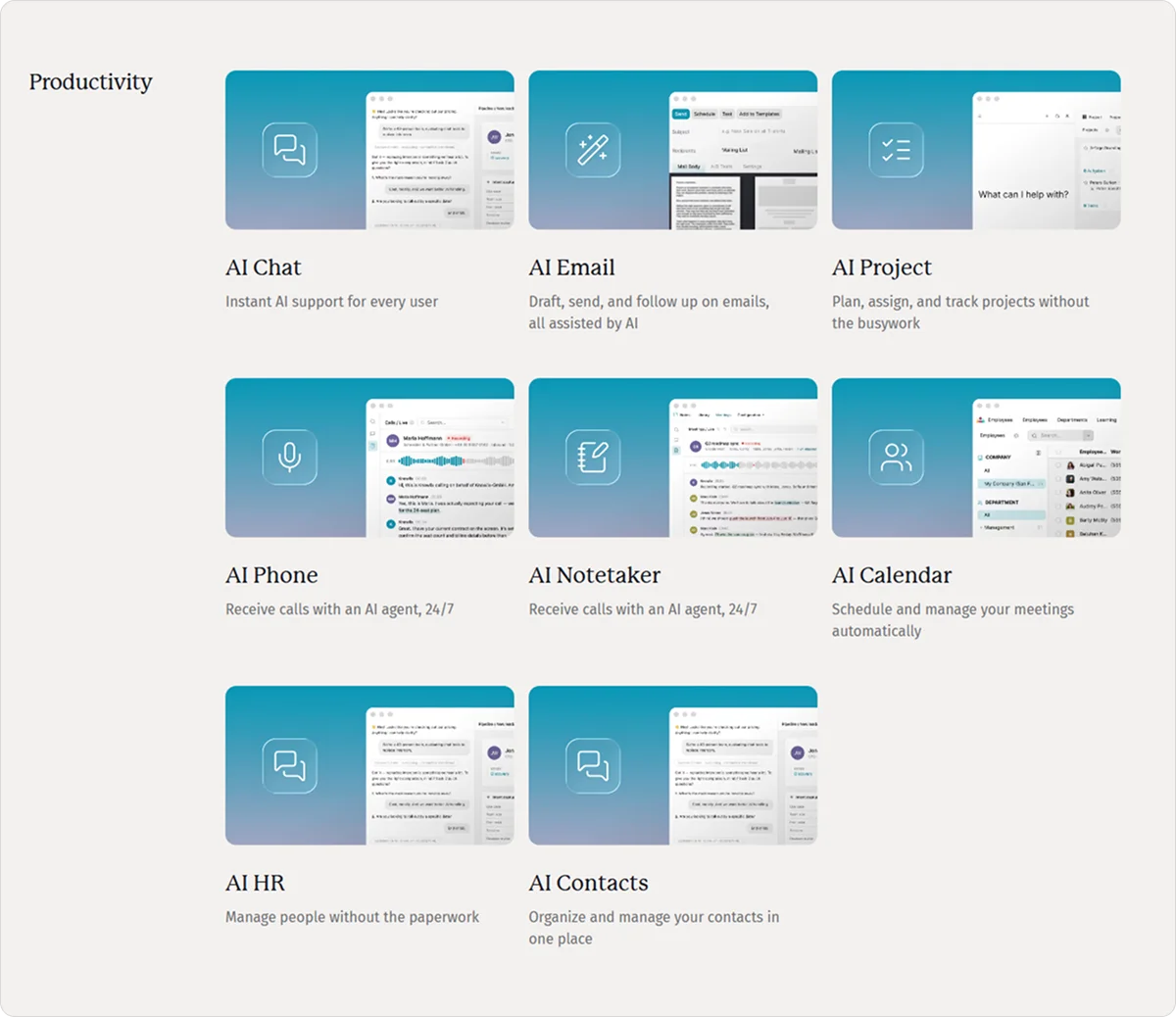
The AI Teammate is at the center of our business tools.
It captures context in real time, keeps your information updated, and proactively recommends the next best actions.
After a meeting, it can instantly summarize key points, update your CRM, draft follow-ups, generate quotes, create tasks, and advance deals without manual input.
Every action is visible and approval-based by default, with the option to switch to full autonomy whenever you choose.
Here are some of our agentic solutions:
- AI Chat: Captures conversations, qualifies visitors, and triggers next steps automatically
- AI HR: Manages your entire recruitment pipeline, sets up onboarding tasks, assigns equipment, and schedules first appraisals automatically
- AI Notataker: Records your meetings, captures context, structures what’s important, and turns meeting notes into actionable insights
- AI Projects: Enables you to describe work in plain language and turns it into structured tasks, milestones, and project updates automatically
- AI Email Marketing: Reads your customer data, understands intent, segments audiences, generates, personalizes, and sends campaigns based on real customer behavior
- AI CRM: Captures leads, updates pipelines, and manages sales activities in real time, and allows you to share meeting insights and interactions across your connected CRM, calendar, customer support, and task management tools.
- AI Sales: Automatically manages leads, pipelines, and sales workflows in one connected system, handles key sales tasks in real time, and triggers follow-ups to keep deals moving forward
- AI Inventory: Tracks stock, automates replenishment, and coordinates inventory across sales, purchasing, and operations
All of our products are built with small and growing businesses in mind that want to reduce manual work and leverage AI without the complexity of enterprise systems.
Sign up for Knowlix to unify your tools and start automating your business with AI.


Frequently asked questions


AI agents work by receiving inputs, analyzing information, making decisions, and taking actions to achieve a specific goal.
They combine LLMs, memory, reasoning capabilities, and integrations with external tools or APIs to execute tasks across workflows.
Since they operate in a continuous loop of input, reasoning, action, and feedback, they can adapt and improve performance over time.
The best AI project management tools are Knowlix, Asana, Monday, and ClickUp.
They offer various agent types, including reactive, conversational, decision-making, task automation, and more.
AI agent workflow automation is the use of autonomous AI agents to execute and manage business processes with minimal human intervention.
AI agents can understand context, make decisions, interact with multiple systems, and adapt to changing workflows in real time.
This way, businesses can automate more complex tasks such as customer support, research, sales operations, and end-to-end workflow execution.
Subscribe for Our Newsletter
Book your call below.


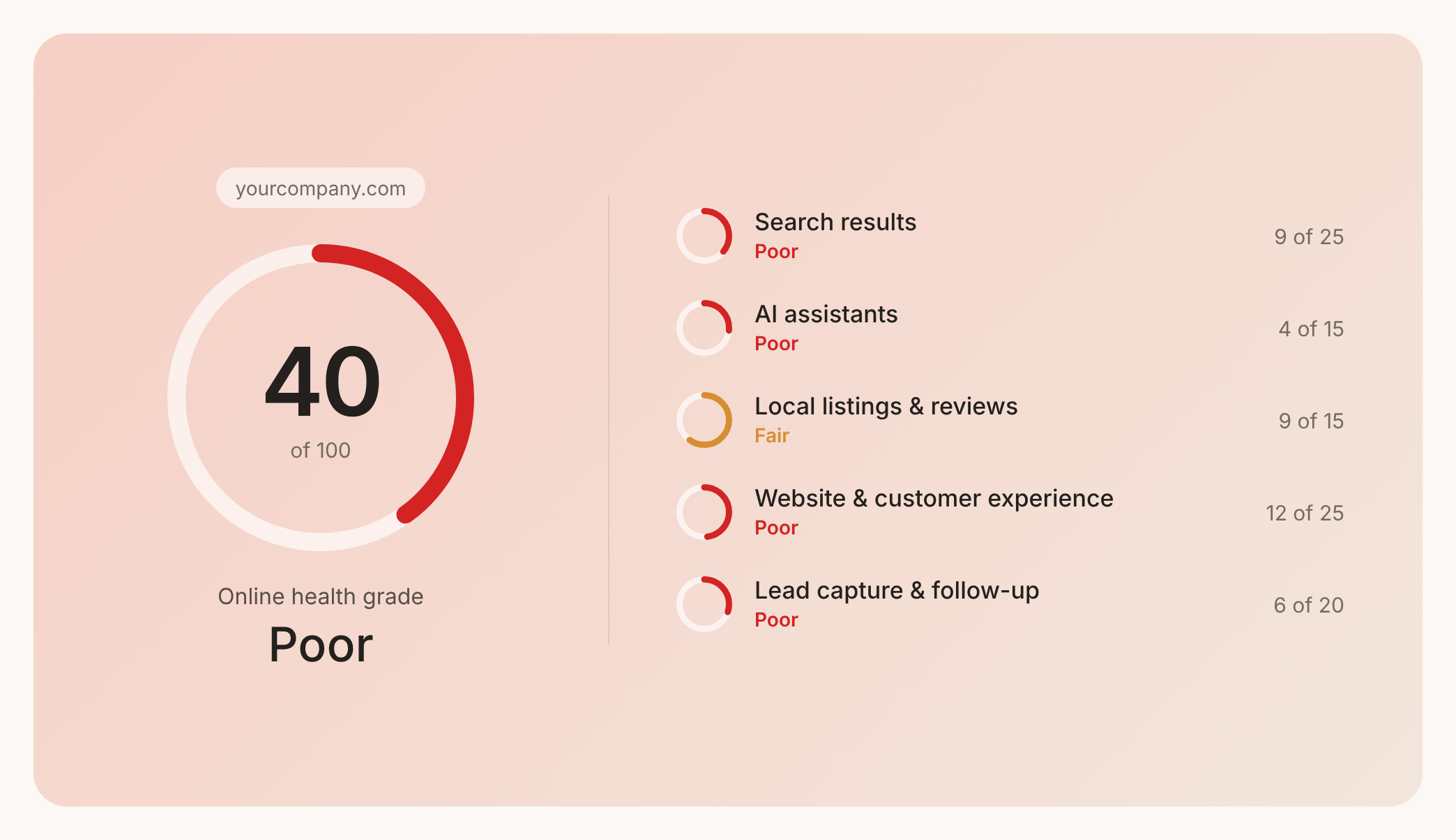

Check your website health score
Scan your site in seconds and make sure you're beating your competitors.
