
ChatGPT Work explained: what it means for small businesses

ChatGPT Work is an agent OpenAI launched on 9 July 2026 that takes an outcome, works on its own for hours across your connected apps, and returns finished documents instead of chat replies. It runs on OpenAI's existing tiers, so a small team can start on the $20 Plus plan or the $20-per-seat Business plan on annual billing, with a free desktop app for a first look. Watch three things: usage is metered, the agent still needs your supervision, and the rollout may not have reached your tier yet. The bigger lever for a small business is context. An agent is only as good as the data it can reach, and scattered tools cap it.
On 9 July 2026, OpenAI shipped a product that changes what "ask ChatGPT" means for a small business. Most owners already open ChatGPT for a quick answer. ChatGPT Work does something else. You give it an outcome, and it goes and finishes the task.
This is a news explainer for a small service-business owner who saw the headline and wants the practical read, current as of 10 July 2026. What is ChatGPT Work, what can it do for a 1 to 15 person team, what does it cost, and what should you watch before you trust it? We also cover the part the launch coverage skipped: an agent is only as useful as the context it can reach.
What is ChatGPT Work?
ChatGPT Work is an agent OpenAI launched on 9 July 2026 that takes an outcome, gathers context across your connected apps and files, breaks the goal into steps, and works on its own for hours, returning finished documents, spreadsheets, presentations, reports, and web apps instead of chat replies, Reuters reported on launch day. That is the plain-language read of "agent": software that finishes a task rather than software that answers a question.
It runs on GPT-5.6, which reached general availability the same day in three tiers named Sol, Terra, and Luna. According to The Tech Portal, OpenAI says the model reasons more reliably "across long chains of decisions," a claim worth attributing to OpenAI rather than treating as tested fact.
A new unified ChatGPT desktop app for macOS shipped to every tier, including Free, on 9 July, with Windows following over the days after. The old Codex app is merged in, and the previous app becomes "ChatGPT Classic," per 9to5Mac. OpenAI also opened Sites in public beta, which turns finished work into a shareable dashboard, tracker, or internal portal at a URL, BNN Bloomberg reported.
What can ChatGPT Work actually do for a small business?
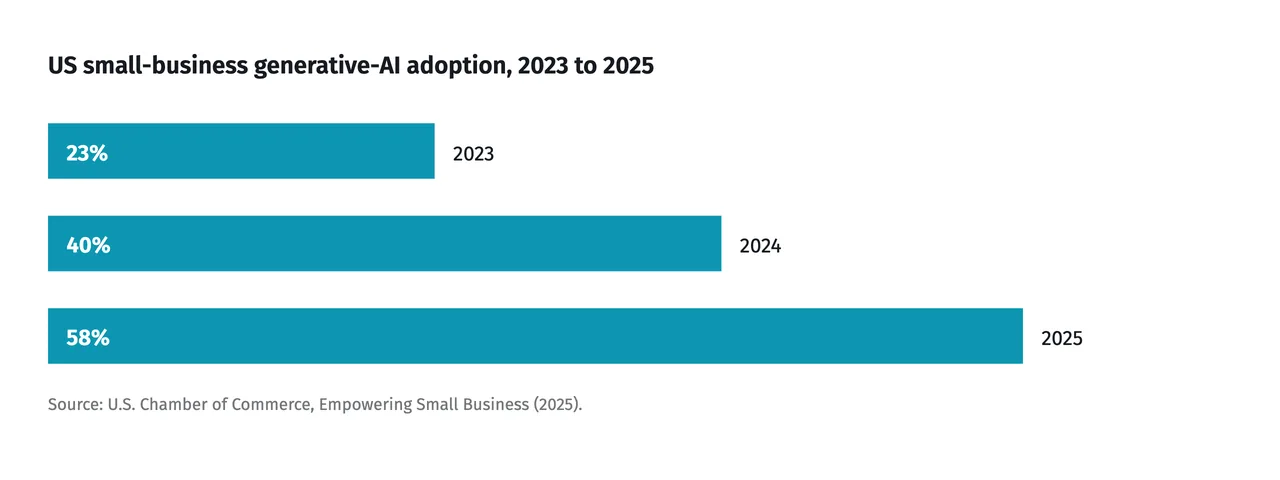
58% of US small businesses used generative AI in 2025, up from 40% in 2024 and about 23% in 2023, so for most owners the question is no longer whether to use AI but what a finishing agent takes off the day (U.S. Chamber of Commerce, 2025, retrieved 2026-07-10). ChatGPT Work for small business is aimed at exactly that gap: the admin that eats an owner's evening.
Map it to a normal week. You can ask it to draft the client proposal or scope document as a finished file rather than an outline. You can hand it a brief and get back a project tracker or a budget spreadsheet. You can ask it to pull a status report together from the tools you already run.
Early coverage from The Tech Portal lists connectors including Slack, Gmail, Google Drive, and CRM tools. For a 1 to 15 person service business, the win sits in the routine admin that runs through the owner because they remember it, even though it never needed their hands. A finishing agent is well suited to that kind of work.
How much does ChatGPT Work cost for a small team?
ChatGPT Work rides on OpenAI's existing tiers, so the entry point for a small team is the $20 per month Plus plan or the $20 per seat Business plan on annual billing ($25 monthly), which carries a two-seat minimum, per OpenAI's pricing page; CloudZero's cost breakdown shows the same numbers. A Plus seat lands near €18 at July 2026 rates, though OpenAI bills in USD. That framing matters for ChatGPT Work pricing: most tiny teams do not need the top plan.
Rollout order is worth checking against your own account. Web and mobile access reached Pro, Enterprise, and Edu first on 9 July, then expanded to Plus and Business "over the next few days," so a Plus or Business subscriber may still be waiting for the agent on web or mobile, according to BNN Bloomberg. The macOS desktop app already reached every tier, including Free, on launch day.
The Pro plan sits at $200 per month and is built for heavy individual power users. For a typical small team that will not use its capacity, it is more than the work needs. Here is the tier map for a tiny team.
TierPrice (USD/month)Two-seat minimum?Who it fitsFree$0NoTrying the desktop app, light useGo$8NoLight solo use, ad-supported in the US; not yet named in the ChatGPT Work rolloutPlus$20NoA solo owner or one power userBusiness$20 per seat (annual; $25 monthly)Yes, 2 seatsA small team that wants admin controlsPro$200NoHeavy individual power users; more than most small teams needEnterpriseCustomLarger minimumLarger organizations
What should you watch before you trust ChatGPT Work?
OpenAI has published no error or hallucination rate for ChatGPT Work, and launch-day coverage from Reuters and BNN Bloomberg carried no independent risk assessment, so the honest starting point is that an agent working for hours needs supervision. Three things deserve a small owner's attention before they hand over real work.
First, cost is metered. A launch-day write-up from Digital Applied reports usage is metered like Codex and scales with task complexity, so a long autonomous job would sit on top of the subscription price, though admin spend controls exist to cap it. This is a single source, so confirm it against your own billing page. Budget for it the way you would budget for a variable bill, and set the controls before you run a big task.
Second, supervision is real work. Per the same Digital Applied coverage, again a single source, Plan mode shows a step-by-step plan for your approval, with configurable check-ins and action approvals. That review is time you spend, at least while you learn to trust the output. OpenAI frames the product the same way. In quotes carried by Engadget, it says "you remain in control of how ChatGPT works with you," that "you decide what it can access," and when "it needs your approval before taking action."
Third, treat outputs as drafts to check, the same way you would a new hire's first week. With no published reliability numbers, that habit is the safe default. And remember the rollout is still in progress, so the agent may not be on your web or mobile tier yet.
Why an agent is only as useful as the context it can reach
An agent that finishes work still has to find the work first, and that is where most small businesses lose it: organizations run more than 1,000 apps, and about 70% of them are not connected to each other (Salesforce MuleSoft, 2023, retrieved 2026-07-10). A finishing agent inherits that problem. Its output is only as good as the data it can reach.
Small businesses feel this at their own scale. The average company ran 106 SaaS apps in 2025, and even far smaller teams carry their own version of that sprawl (BetterCloud, 2025, retrieved 2026-07-10). And the switching between them has a measured cost: knowledge workers toggle apps about 1,200 times a day and lose around 4 hours a week, roughly 9% of work time (Harvard Business Review, 2022, retrieved 2026-07-10). That is the same friction an agent hits when it has to assemble context from scattered tools.
Here is the point, and it lands on the problem rather than any vendor. When your client, the project, the invoice, and the emails already live in one platform, an AI agent for small business work starts with the full picture. When they live in six disconnected tools, any agent has to assemble that picture before it can start, and you spend your own time granting it access. This is the same friction behind the wider cost of disconnected business systems.
This is the part where we have skin in the game, so read it knowing that. Knowlix is the all-in-one AI Business Platform, with an AI Teammate that does routine work on autopilot inside a system that already holds the context. The typical stack we see when a small business moves onto Knowlix spans a CRM, invoicing, an inbox, a file drive, a project tracker, and a calendar. An agent working across that stack needs each of those connections granted, and kept alive, before it can start. You can read more on how the AI teammate automates client work and how client context shapes the output.
.
Do you still need your other software if you use ChatGPT Work?
Yes, for now. ChatGPT Work is an agent that acts across the tools you already run, so it reaches into your CRM, your invoicing, and your project tracker without replacing any of them. The connectors are the whole point of the product.
The more scattered those tools are, the more of the agent's time goes to connecting them and the more approvals you have to grant. This is where the number of systems you run changes the math. Fewer systems to connect means one context to draw from, and less setup standing between a request and a finished result. That is the short bridge to the verdict.
Quick Verdict
ChatGPT Work is an agent that returns finished documents instead of chat replies, on OpenAI's existing $20 Plus and $20 per seat Business tiers, with a free desktop app for a first look. Watch the metered cost, the supervision it still needs, and a rollout that may not have reached your tier yet.
The bigger lever for a small business is context. An agent is only as good as the data it can reach, and scattered tools cap it. When the client, project, and invoice already live in one place, the AI teammate starts with the full picture. Knowlix costs $24.90 (€24.90) per user per month, reduced from $35.60, with a 7-day free trial. Start at knowlix.ai, or see the pricing first.
Disclosure: this article is published by Knowlix. We build an all-in-one AI Business Platform. ChatGPT Work is a product we do not sell. In the one section where our platform has a stake in the argument, the case for keeping your context in one place, we say so.


Frequently asked questions


The new desktop app reached all tiers, including Free, on 9 July 2026, so you can try it at no cost. The full agent runs on paid tiers, Plus at $20 and Business at $20 per seat on annual billing, and usage is metered, so a long task can cost more than a flat subscription.
Regular ChatGPT answers questions in a chat. ChatGPT Work takes an outcome, works on its own for hours across your connected apps, and returns finished documents, spreadsheets, and reports. One answers a question, the other finishes a task.
Only what you connect and approve. OpenAI says you decide what it can access and when it needs your approval before acting. Early coverage reports connectors including Slack, Gmail, Google Drive, and CRM tools, each of which you switch on yourself.
Yes. It acts across the tools you already run rather than replacing them, so the more scattered your tools, the more setup the agent needs. An all-in-one platform gives it one place to draw context from and fewer connections to grant.
Subscribe for Our Newsletter
Book your call below.


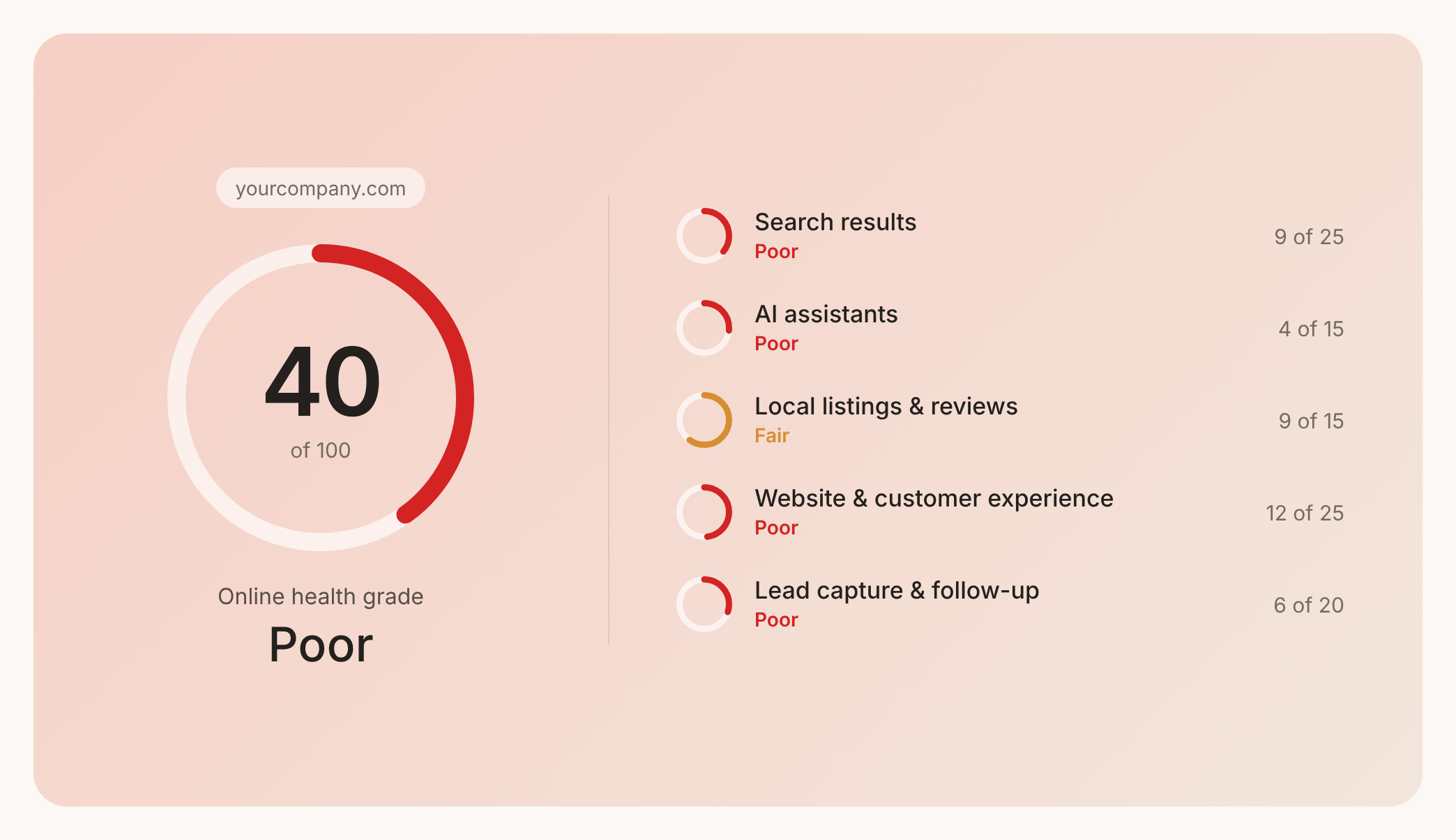

Check your website health score
Scan your site in seconds and make sure you're beating your competitors.
