
How to Chase Unpaid Invoices with AI (Without Chasing)

An AI teammate can watch which invoices are overdue and draft the follow-up for you, in each client's context and your own tone. You read it and send it. The work of remembering and writing is done, and the decision stays yours. That matters because most US small businesses are owed money on unpaid invoices, and owners lose hours every week doing the chasing by hand. Standalone dunning tools fire reminders in isolation. An all-in-one platform drafts with full context, because the client, the project, the delivery and the invoice already live in one place. You get paid without becoming the person who chases.
"Nobody chases my invoices as well as I do."
Most owners believe some version of this. So the reminder sits on your list. You send it at 9pm, after the client work is done, when you finally remember. Then you do it again next week.
An AI teammate changes what that costs you. It watches which invoices are overdue, and it drafts the follow-up in the client's context and your tone. You read it, and you send it. The remembering and the writing are done. The decision stays yours.
This is how AI invoice chasing works in practice, what it costs to keep doing it by hand, and how to keep control while an AI does the drafting.
Why do so many invoices get paid late?
Late payment is the normal state for small businesses. In its 2025 US Small Business Late Payments Report, Intuit QuickBooks found that 56% of US small businesses are currently owed money on unpaid invoices, averaging about $17,500 each (QuickBooks, 2025, retrieved 2026-07-01).
The same report found 47% of small businesses have invoices overdue by more than 30 days. On the B2B side, Atradius reported in its 2024 Payment Practices Barometer that roughly half of all US B2B invoices were overdue, cashed on average about 20 days past due (Atradius, 2024, retrieved 2026-07-01).
That gap between invoiced and paid is where the pressure builds. The Federal Reserve's 2025 Report on Employer Firms found 51% of small employer firms named uneven or uncertain cash flow as a financial challenge in the prior year (Federal Reserve, 2025, retrieved 2026-07-01). When half your invoices run late and cash flow is already tight, chasing stops being admin. It becomes survival.
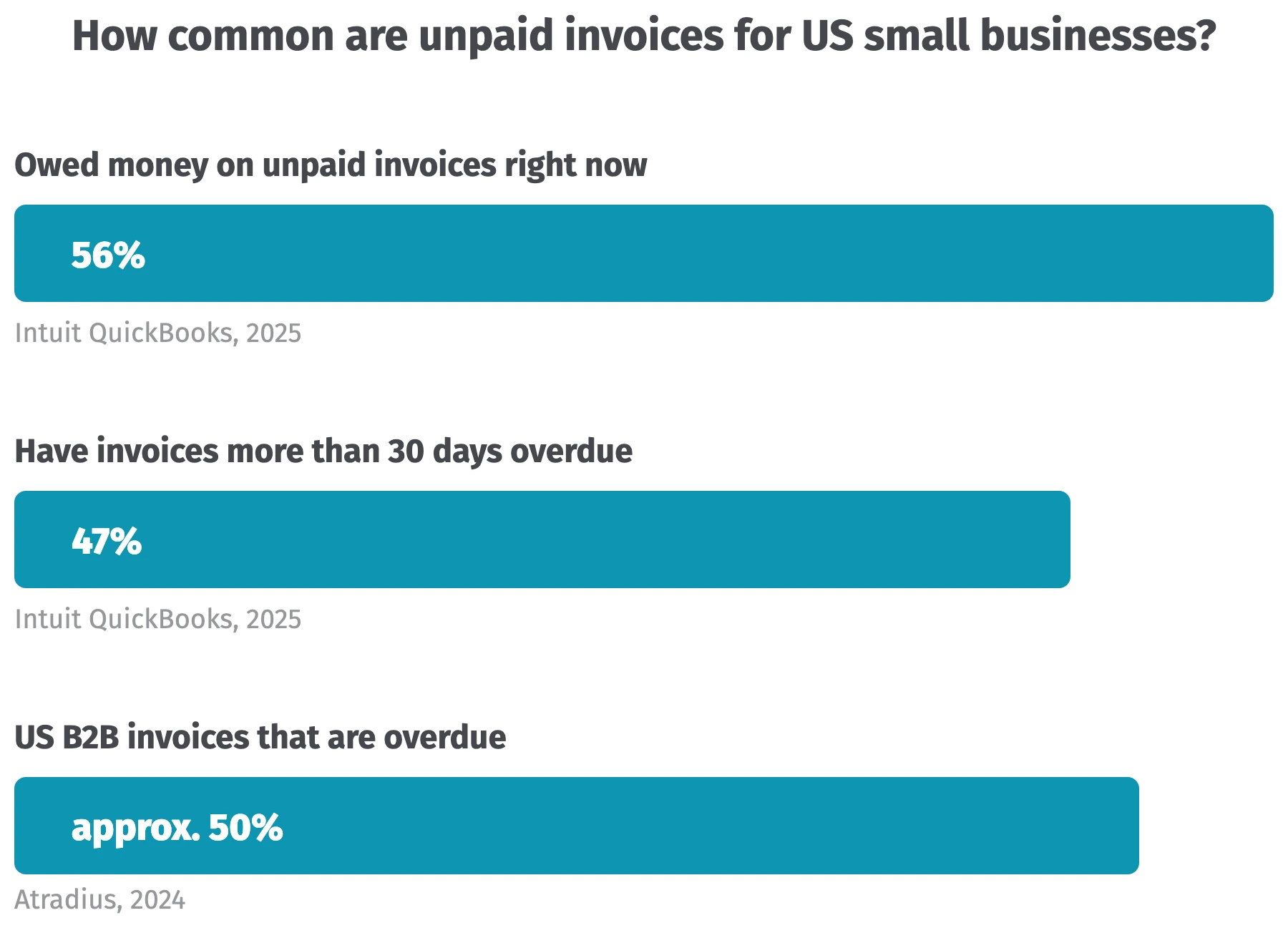
How common unpaid invoices are for US small businesses (Intuit QuickBooks 2025; Atradius 2024).
What chasing invoices by hand actually costs you
The cost is your week. A 2023 Time etc survey of entrepreneurs found owners spend about 36% of their work week on admin, with 27% chasing late payers in a typical week (survey by virtual-assistant provider Time etc, 2023, retrieved 2026-07-01). That is time that never reaches a client, a proposal, or your family.
Chasing an invoice is the clearest example of a task that only feels like it needs you. It runs through you because you are the one who remembers it, even though it never needed your hands. And the longer it stays on your plate, the more it costs. A 2026 FreshBooks study found that owners spending five or more hours a month on manual invoicing were nearly three times more likely to face cash-flow problems (FreshBooks, 2026, retrieved 2026-07-01).
That is the trap. The task is low value, so you delay it. The delay hurts your cash flow, so you stay busy and stressed. You end up running a job you cannot step away from. Running your invoicing inside a system that already holds your clients and projects is what breaks that loop, and it is the same shift that fixes the wider cost of disconnected business systems.
What does "chasing invoices with AI" actually mean?
Chasing invoices with AI means software watches your overdue invoices and prepares the follow-ups, so a person does not have to track and write each one by hand. In practice, the market has three shapes of this, and they are not equal.
The first is a standalone accounts-receivable tool that bolts onto your accounting software and runs multi-channel reminder sequences (a process often called dunning: a scheduled series of overdue reminders). The second is your accounting or invoicing software sending its own built-in email reminders. The third is an all-in-one platform with an AI teammate that drafts the follow-up using the full context of the client and the work.
The difference that matters is context. A bolt-on tool chases based on the aging report alone. It knows an invoice is late. It does not know you delivered the final files yesterday, or that you are mid-negotiation on a renewal. An AI teammate inside the system where the client, project and invoice already live can draft a follow-up that reads like you wrote it.
How an AI teammate chases an unpaid invoice
Inside an all-in-one platform like Knowlix, the AI teammate handles the parts you keep forgetting, and hands you the parts that need a person. The flow is simple and stays under your control.
First, it detects. The AI teammate reads your accounts-receivable list and spots which invoices are overdue, without you opening a report. Second, it drafts. It writes the follow-up in the client's context and your tone, referencing the right invoice and the work behind it. Third, you send. Knowlix puts the finished draft in front of you. You read it, adjust anything you want, and send it yourself.
Say you finished a website project for a client last month and the invoice is now two weeks overdue. Instead of you noticing at 9pm, the AI teammate flags it, and drafts a short, warm note that references the delivered project and the invoice number. You glance at it, change one line, and send. 90 seconds, and you were never the one keeping the mental tab.
Nothing goes out on its own. The AI does the remembering and the writing, which is the part that ate your evenings. You keep the judgment and the final click, which is the part that should stay with you. That is the honest answer to "nobody chases as well as I do." It drafts a follow-up you would recognize as your own, and you are still the one who decides.
Knowlix is the all-in-one AI Business Platform that replaces the stack of separate tools most owners run. Because your clients, projects, and invoices live in one place, the follow-up is written with context a standalone reminder never sees. You can read more on how the AI teammate automates client work and how client context drives better follow-up.
How to set up AI invoice chasing in Knowlix (3 steps)
You do not need a separate tool or a technical setup. The steps map to how the AI teammate already works.
- Keep invoicing where your clients live. Your invoices sit in the same platform as your client records and projects, so the AI teammate can see the full picture behind each one.
- Let the AI teammate watch the aging. It reads your accounts-receivable list on its own and flags which invoices are overdue, so you stop manually checking who owes what.
- Review the draft and send. When an invoice is overdue, the teammate drafts the follow-up in context and your tone. You read it, edit if you want, and send it yourself.
The result is a follow-up that happens on time, every time, without you being the one who has to remember or write it.
See it in action
Knowlix drafts the invoice follow-up inside the platform your invoices already live in.
The AI teammate spots the overdue invoice, drafts the reminder with the client's full history in view, and waits for you to hit send. $24.90 per user per month, with a 7-day free trial.
Start your 7-day trialWhat are your options for AI invoice chasing?
Your choice comes down to how much of your stack you want to run, and how deep you need the chasing to go. The honest trade-off: standalone specialists reach further into hardcore collections, and all-in-one platforms give you context and one login instead of another subscription.
OptionBest forHow it chasesHonest trade-offStandalone AR-automation toolFirms with a heavy, formal collections processMulti-channel sequences: email, SMS, automated calls, even postal lettersDeepest dunning, though it is a paid layer on top of your accounting software, and the best features are add-onsAccounting software remindersOwners who want the basics inside a tool they already pay forUp to three scheduled email reminders per invoiceFree within the plan, though email-only and one-size-fits-all, with no context or judgmentPayment platform remindersBusinesses focused on paying bills and moving moneyBasic email reminders alongside payment railsStrong on payments, thin on collection follow-upAll-in-one platform with an AI teammate (Knowlix)Owners who want to stop running six tools and keep contextAI detects overdue invoices and drafts the follow-up in context; you review and sendOne login and full context, with less formal dunning depth than a dedicated collections stack
Four ways to run AI invoice chasing, what each is best for, and the honest trade-off (tool categories, not brands; Knowlix named where it is one of them).
Do you stay in control if AI handles the chasing?
Yes, and that control is the point. The fear behind handing invoicing to AI is easy to picture: an automated system that emails the wrong client, or duns someone you are about to close a deal with, damages a relationship you spent years building. Public reviews of "AI that runs on its own" are full of these stories.
Knowlix is built so that never happens by accident. The AI teammate prepares the follow-up. You approve it. Nothing reaches a client without your review. You get the speed of an assistant who never forgets, and you keep the final say on every message that carries your name. Proof beats promise here: the safest AI is the one that shows you its work before it acts.
When is a standalone tool the better fit?
Sometimes it is, and saying so is more useful than pretending otherwise. If you send more than roughly a hundred invoices a month and your process needs phone escalation, postal notices, or legal steps, a dedicated AR specialist reaches further than any all-in-one platform, and it is worth the extra subscription.
If your problem is fragmentation and time, the picture flips. You run several disconnected tools, the follow-up keeps slipping, and you want context and one login rather than another bolt-on. That is where an all-in-one platform with an AI teammate fits, and it is where most small service businesses sit. If that is you, the fastest win is to stop paying the time-tax on a task an AI teammate can draft for you.
Disclosure: Paul Wegner writes for Knowlix, the all-in-one AI Business Platform described in this article.


Frequently asked questions


AI can detect overdue invoices and draft the follow-up for you. In Knowlix, you review and send the draft yourself, so nothing reaches a client without your approval.
It is safe when the AI drafts and you approve. Knowlix prepares the follow-up and waits for your review, so you keep the final say on every client message.
Not if you use an all-in-one platform. Knowlix drafts follow-ups inside the same system that holds your clients, projects, and invoices, so you avoid paying for a separate dunning tool.
A 2023 Time etc survey found 27% of owners chase late payers in a typical week, part of the roughly 36% of the work week owners spend on admin.
It helps by making the follow-up happen consistently instead of when you remember. Consistent, timely reminders shorten the gap between invoiced and paid.
Subscribe for Our Newsletter
Book your call below.


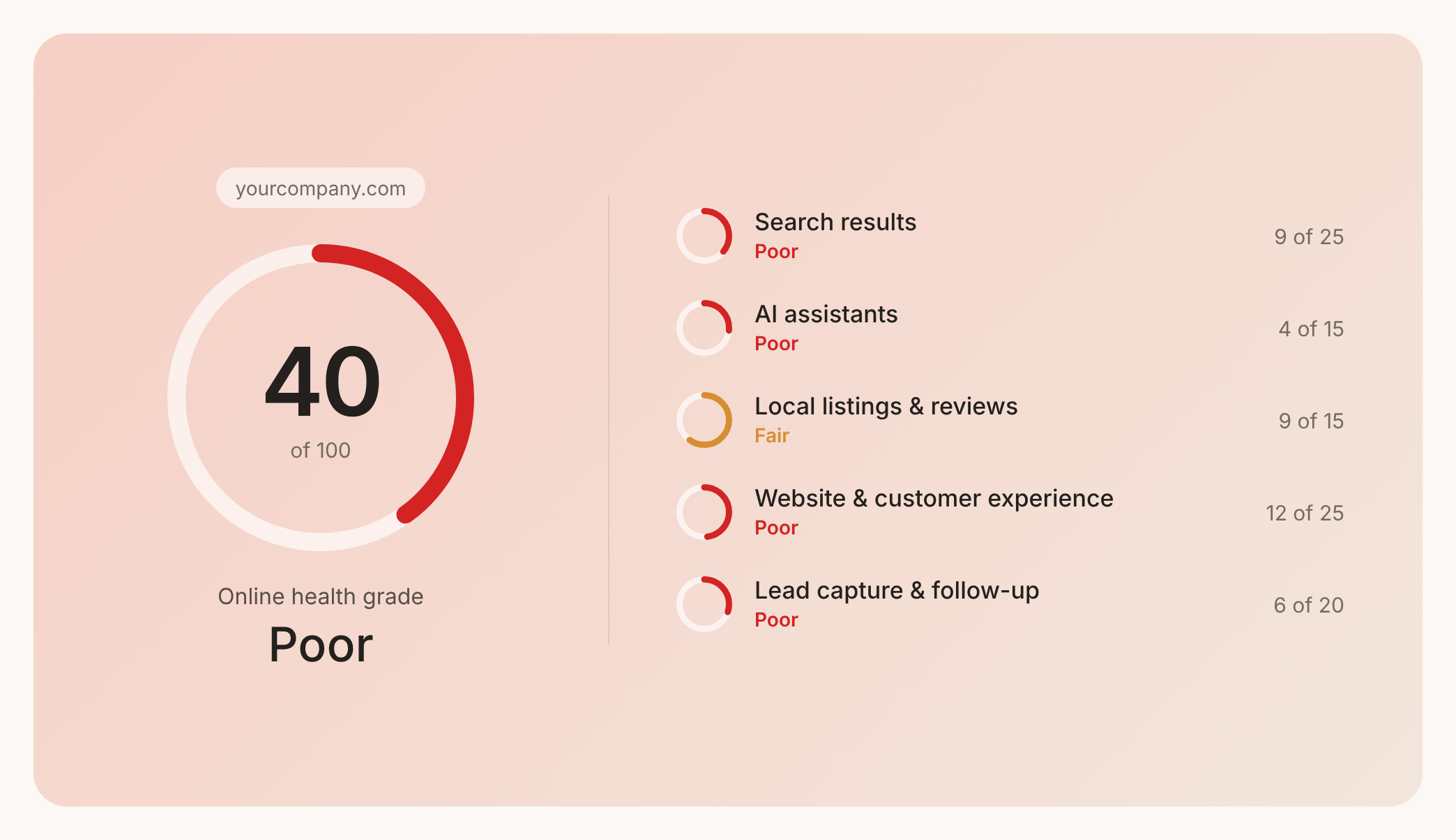

Check your website health score
Scan your site in seconds and make sure you're beating your competitors.
