
Generative AI in ERP: Use Cases & Benefits for Small Businesses


Generative AI in enterprise resource planning (ERP) is here to stay. Companies are increasingly reliant on this technology, which has proven to streamline operations, improve decisions, and achieve unprecedented business outcomes. This is now true for both enterprises and small businesses.
The global market size for AI-powered ERP systems has surpassed 7 billion USD in 2026 and is projected to reach 58.7 billion by 2035 with a whopping 26% annual growth rate.
Jumping on the bandwagon is a logical choice for any company serious about growth. This guide breaks down all the ways generative AI in ERP can benefit your small business.
Key takeaways
- GenAI adds autonomy to ERP.
ERP systems have been able to detect patterns and run basic automations for a while now. Generative AI has introduced contextual understanding and the ability to handle complex tasks across departments.
- The benefits compound across the business.
GenAI-powered ERPs reduce implementation effort, boost productivity, minimize errors, and improve customer experiences simultaneously. Small businesses can achieve results that previously required large teams and enterprise-level budgets.
- Daily operations get significantly more efficient.
GenAI automates a wide range of tasks, such as data cleaning and migration, report generation, and personalized communications. It also analyzes workflows to surface bottlenecks that busy teams often miss during day-to-day operations.
- Planning and reliability become proactive.
GenAI models financial scenarios, forecasts demand shifts, and predicts system failures before they cause downtime. For small businesses, this provides a strategic planning advantage that used to require dedicated analysts or expensive consultants.
- Knowlix makes GenAI ERP accessible for small businesses.
With 50+ integrated apps and a built-in AI teammate, Knowlix delivers intelligent ERP capabilities without enterprise complexity. Your AI teammate handles repetitive tasks autonomously and prepares actions for your review.
Generative AI in ERP: The basics
An ERP is a system that centralizes business applications, enabling easier management across departments such as finance, human resources, and customer relationship management.
The previous generation of systems was already intelligent. They could analyze data, detect patterns, and execute tasks automatically.
What generative AI (GenAI) has brought to the table is more autonomy and contextual nuance. Today’s ERPs can execute complex, cross-departmental workflows on their own. They can even interact with customers, much like a human agent, using CRM data to provide personalized answers.
What's more, they can execute entire workflows based on simple language prompts.
Despite the technology being new, top-performing companies are already scaling their businesses using GenAI in ERP.
According to Deloitte's 2025 survey, AI and GenAI ranked as the leading technology investment, with 74% of organizations spending on them in the previous year. Additionally, 84% of respondents believed they were gaining significant value from these technologies.

Benefits of generative AI in ERP
GenAI impacts every minor aspect of ERP, which adds up to big wins for the organization:
- Easier implementation: ERPs are notoriously complex and difficult to adopt, but GenAI removes the technical barrier. According to BCG, GenAI can lower ERP implementation efforts by 20–40% and onboarding time by 50–60%.
- Enhanced productivity: GenAI-driven ERPs have made repetitive manual tasks a thing of the past. Employees can now deliver value faster than ever. They also have more time and energy for high-level work, such as innovation and strategy.
- Fewer errors and risks: While it’s still not perfect, GenAI can deliver more consistently than humans, as it never gets tired or burnt out. It reduces the likelihood of costly mistakes and delays.
- Customer satisfaction: A GenAI ERP allows you to address customer queries quickly. AI can fetch data, resolve issues, and even interact with customers, all while keeping discussions hyper-personalized.
- Effortless scaling: Businesses can expand without hiring a large team, drowning in admin work, or interrupting operations. A sudden surge in orders or operational complexity won’t outpace your team’s capacity.
- Cost-effectiveness: All the above-listed benefits ultimately affect the bottom line. Businesses can save on headcount and costly delays, repurposing those savings for improvements.
These advancements are especially valuable for small businesses. GenAI in ERP allows them to make enterprise-level achievements with a 5-person team and a limited budget.
9 examples of generative AI in ERP
Here are nine practical ways generative AI is already improving ERP systems, along with the specific advantages each offers your business:
Content and documentation
ERPs touch dozens of document types, including financial reports, technical specs, project updates, internal memos, and customer emails. Keeping them all accurate and up to date is a time drain that scales with your business.
GenAI can draft, update, and maintain these documents automatically based on your system data. It can turn raw financial numbers into formatted reports, generate personalized customer messages, and keep project documentation in sync as things change.
According to BCG, businesses can expect a 30% to 50% reduction in the time spent on document creation and updates. For small businesses without dedicated technical writers or communications staff, the time saved goes directly back into revenue-generating work.
Data management
Data quality determines the quality of your decisions, but also whether your ERP migration goes smoothly or becomes a months-long headache. Cleaning, mapping, and loading data from legacy systems are among the most laborious parts of any ERP project.
GenAI tools automate much of this process by recognizing patterns in your existing data, predicting entry errors, and generating synthetic datasets when real data is limited or sensitive.
This kind of automation significantly cuts data preparation time. It also allows for more testing cycles before final cutover, which reduces the risk of corrupted or mismatched records ending up in your live environment.
Identifying requirements
Capturing what your business actually needs from an ERP is a multi-faceted process that takes effort and is easy to get wrong. Requirements come from stakeholder interviews, existing system data, and strategic goals, all of which need to be sorted, categorized, and prioritized.
GenAI handles this by analyzing those inputs and producing organized requirement documents in a fraction of the time. This helps align your ERP project with genuine business priorities instead of letting technical details dominate the conversation.
As a result, fewer resources are wasted on back-and-forth and unused features, and the software pays for itself.
Customizing the ERP
Most ERP implementations need custom code to connect modules and adapt the system to specific business needs. GenAI can produce and validate code significantly faster and with fewer errors than human developers, though their oversight is still required.
For small businesses that don't maintain dedicated development teams, this makes meaningful customization achievable without outsourcing every technical decision.
Analyzing workflows
Knowing where your processes slow down is the first step toward fixing them. Before you commit to any changes, you can use GenAI combined with process mining tools to:
- Map out your current workflows
- Simulate alternative approaches
- Predict how each scenario would perform
Instead of relying on gut instinct or paying consultants, you get ready-made, data-backed recommendations aligned with your actual business goals. Moreover, GenAI catches inefficiencies that go unnoticed when everyone is too busy running operations to step back and evaluate them.
Financial planning
Financial modeling used to require dedicated analysts or outside consultants that most small businesses couldn't justify.
GenAI changes that equation. It generates projections based on different business conditions, tests "what if" scenarios for supply chain disruptions, and flags potential fraud patterns in transaction data. This especially helps with demand forecasting and gives procurement and logistics teams a head start when the market shifts.

Preventing failure
System downtime during the early stages of an ERP rollout can quickly erode user confidence. GenAI models continuously monitor system logs and hardware sensors, spotting potential failures before they cause outages. As per BCG, this approach can reduce unplanned downtime by 50% to 60%, keeping your operations stable when stability matters most.
The same principle applies beyond software. In manufacturing and logistics, GenAI simulates various operational conditions to predict when equipment might fail. That advance notice gives you time to act before a minor issue becomes a production stoppage.
Customer support
ERP deployments generate a high volume of support requests, both from internal users learning the system and customers needing help. GenAI virtual assistants can resolve routine questions instantly by pulling answers from your knowledge base and CRM data without involving a human agent.
According to BCG, this can reduce manual support tasks by up to 60%, freeing your team to handle complex issues that require actual judgment. Apart from improving response times, GenAI personalizes responses using existing CRM records, resulting in measurable improvements in customer satisfaction and retention rates.
Value tracking
GenAI can also help determine whether your ERP investment actually delivers returns. It bridges the gap between IT performance metrics and business outcomes by simultaneously analyzing data across departments. This makes it easy to identify where value is being created, where it's leaking, and which areas need attention.
With this kind of ongoing visibility, there’s less risk of running a system that looks productive on the surface but causes more harm than good in practice.
Knowlix: The GenAI ERP for growing businesses
Most GenAI ERP solutions target enterprises with dedicated IT departments and six-figure implementation budgets. We built Knowlix for the opposite end of the market: startups and growing teams that need the same capabilities without the overhead.
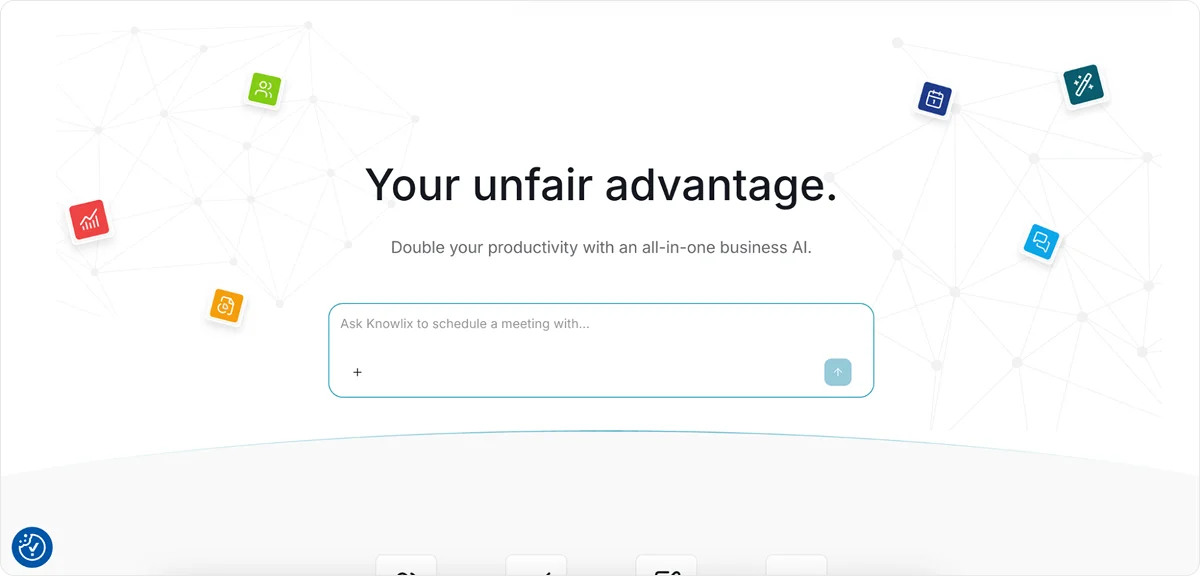
Despite integrating 50+ business apps and an AI teammate, Knowlix can be set up within a day and doesn’t require expertise to start generating value.
Each user gets an AI teammate that excels at repetitive tasks involving unstructured data, like turning emails and meeting notes into concrete business actions. Your AI teammate turns calls into leads, prepares quotations after sales meetings, updates deal stages, and schedules follow-up tasks for the right owner in the project management tool.
It handles all internal actions automatically but pauses before anything reaches another person, giving you full control while the work gets done.
Because everything lives on one platform, your AI teammate operates with full business context at all times. Sales notes feed directly into your CRM, meeting action items flow into project management, and financial data stays current across invoicing and accounting. This means no separate integrations are required, and no data silos to work around.
Sign up for a free trial and give your team a head start with an AI-powered ERP that handles the busywork across every department.
Frequently asked questions
How does generative AI in ERP work?
Generative AI in ERP is built on large language models (LLMs), which train on massive datasets using machine learning (ML) techniques. Models process natural language (NL), enabling the ERP to understand plain-text prompts instead of forcing you to navigate complex menus.
Together, these technologies allow the system to understand multi-step requests, pull data across departments, generate documents, and execute workflows with minimal manual input.
What are the challenges of implementing GenAI in ERP?
The main challenges include:
- Data quality: GenAI output is only as good as the data it works with.
- Technical infrastructure: Some solutions require significant hardware or integration work.
- Cost barriers: Upfront expenses can be prohibitive depending on the vendor.
- Tool selection: Your GenAI ERPs must fit your business size, industry, and budget.
- Privacy and compliance: Sensitive customer information demands strict security and regulatory safeguards.
- Hallucinations: GenAI models can still produce inaccurate outputs, so human oversight is still essential for business-critical decisions.


Subscribe for Our Newsletter
Book your call below.


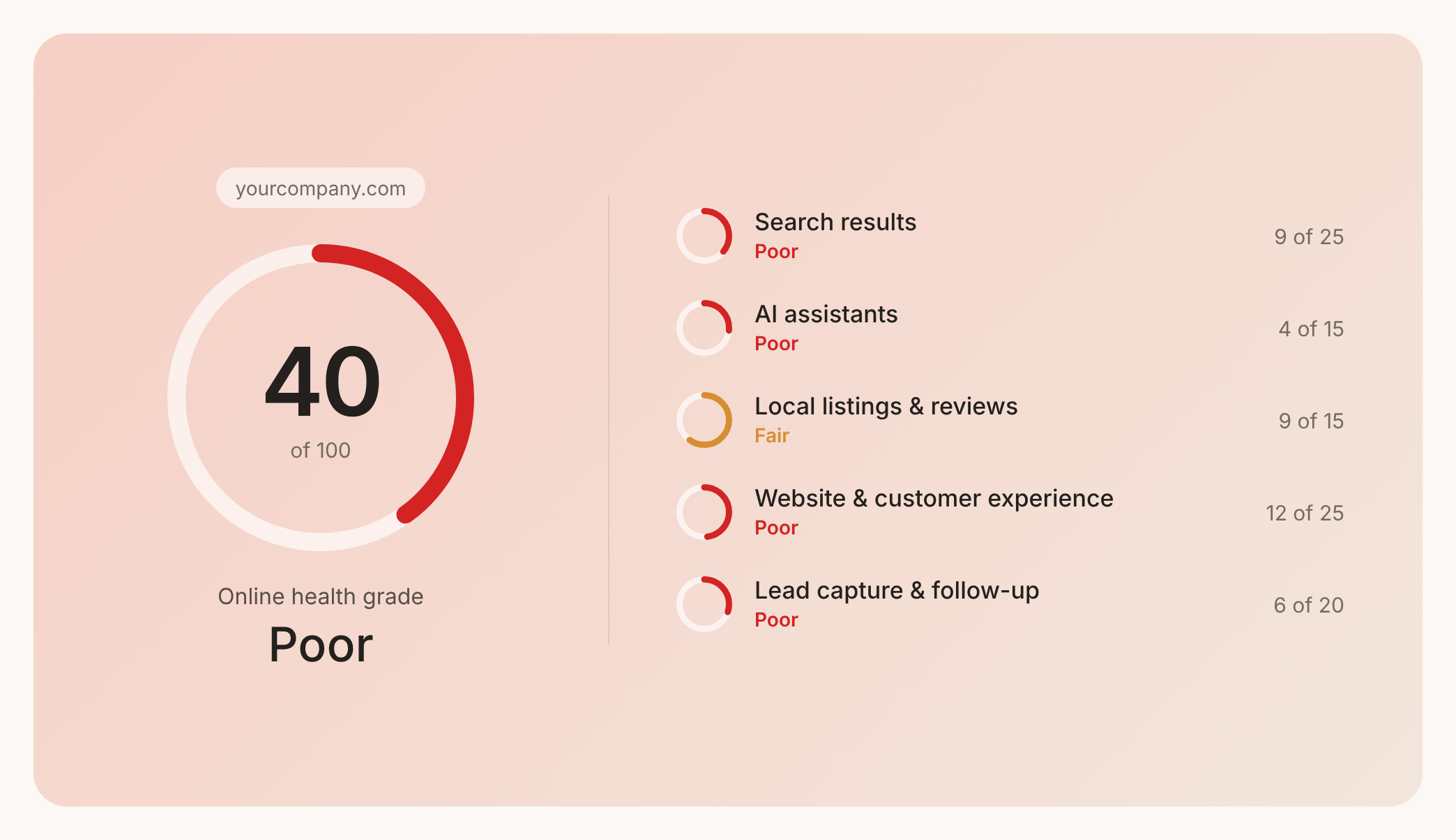

Prüfen Sie Ihren Website-Health-Score
Scannen Sie Ihre Website in Sekunden und stellen Sie sicher, dass Sie Ihrer Konkurrenz voraus sind.
